Can Smart Monitoring Reduce Loneliness in Care Homes?
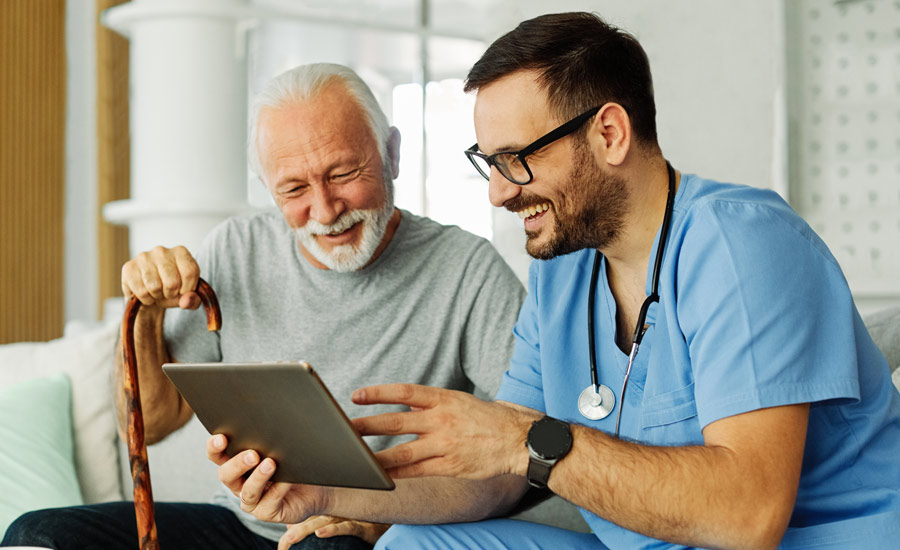
Loneliness affects many people living in care homes, especially when routines become predictable and social opportunities start to narrow. Now homes are using smart monitoring to help staff recognise any early signs that a resident is spending more time alone or becoming less engaged.
Keep reading to learn how this technology is being used to support social connection in care homes and why it could make a genuine difference to residents’ quality of life.
How Does Technology Support Social Connection for Care Home Residents?
Technology in care homes gives staff more notice when a resident is feeling isolated and makes it easier to stay in touch with family members and friends. Smart monitoring identifies when a resident spends more time alone or is not participating in shared activities, prompting staff to check in and encourage interaction.
Used effectively, this kind of technology in care homes provides staff with the insight to act early, helping residents feel more included and connected in their daily lives.
A Closer Look at Loneliness in Care Homes
Loneliness is a real issue in care homes. Even in busy settings, some residents feel separate from the life happening around them. It might start with skipping group activities or spending more time in their room, and it often gets worse gradually.
According to Age UK, around 4 in 10 older people in care homes experience loneliness at some level.
It can affect how well a resident eats and how motivated they feel to take part in daily life. When that happens, physical health can decline too, which creates more work for staff and greater worry for families.
Fortunately, smart tech enables staff to identify these patterns early. Motion and occupancy sensors record how spaces are used and reveal when a resident’s habits begin to shift. When linked with digital care notes, this information allows staff to plan personal support — like encouraging a resident to join a shared meal or spend time in a social area.
These devices are not surveillance, which can worry residents and family members. However, when care teams have a clearer picture of daily routines, they can intervene before the negative effects of isolation become harder to reverse.
How Technology Helps Staff Notice Social Withdrawal
Social withdrawal in care home residents often starts with small changes that are easy to overlook.
For example, maybe a resident who used to sit in the lounge after lunch might start staying inside their room instead, avoiding the social connection that meal times in care homes bring.
Or perhaps a resident who normally appears in the dining room every evening might begin to skip the odd meal. In a busy home, those changes can sometimes slip past staff unnoticed.
That’s where smart monitoring can help.
They bring those patterns into light, so they can be monitored, and staff can make adjustments where needed. Movement and occupancy sensors record how often residents use their rooms and shared spaces and when they spend far more time in their bedroom than usual or stop appearing in a communal area where they were previously a regular presence, the system highlights that change. Care staff are not left to rely solely on memory, which reduces the risk of missing early signs of withdrawal.
Another benefit is that the information becomes more useful when it links into a digital care system. Over a few days, carers can see that a resident who used to take part in group activities is now absent or that they are present for fewer mealtimes. That kind of pattern is hard to track on paper but simple to spot on a dashboard.
The response to this data does not need to be complicated. A carer might plan to sit with that resident for a short, unhurried chat, offer a quieter activity that feels less overwhelming or ask the family to visit at a time when the resident usually spends long stretches alone.
The use of this care home technology points to where attention is needed the most.
Smart Monitoring That Makes Time for Real Connection
Monitoring devices in care homes are not used just as surveillance, watching residents for any other reason other than to help them. Here is how they actually help support well-being:
Fewer Interruptions & Better Conversations
Smart monitoring can:
✓ Reduce the need for repeated room visits
✓ Cut down on unnecessary nighttime disturbances
✓ Help staff focus on residents who actually need support
For example, if bed sensors and movement monitors show that a resident is resting comfortably, staff do not need to open their door every hour.
That saved time can be used to sit with a resident wth dementia who is awake and unsettled, rather than knocking on every door in turn.
Automatic Records Mean Less Paperwork
Many systems link directly with digital care planning tools. This can:
✓ Record routine data automatically, such as sleep patterns and movement
✓ Remove some manual logging and duplication
✓ Help staff finish paperwork faster at the end of a shift
When less time is spent updating charts, staff have more time available for candid things like having a proper chat, sharing a cup of tea or supporting a resident to phone a family member.
Clearer Priorities for Each Shift
Real-time alerts and dashboards help teams see where they are needed most. That can:
✓ Show which residents may need a welfare check
✓ Highlight who has been alone for long stretches
✓ Help staff plan the day around real needs, not guesswork
Instead of walking the whole unit in a loop, a carer can use this insight to choose where to go first. That can turn a rushed “are you alright?” into a few concentrated minutes that actually make a resident feel heard and seen.
Space for Genuine Connection
When routine tasks take less time, staff have more capacity for:
✓ Longer one-to-one conversations
✓ Support with hobbies or interests
✓ Helping residents join group activities
The technology does not create the connection.
It simply clears enough space in the day for staff to make it.
Turning Insight Into Everyday Connection
Smart monitoring was first brought into care homes mainly to improve safety, but is now starting to play a subtle role in emotional well-being and good mental health too. When used well, it lets staff see who might be spending more time alone, who is pulling back from daily life and where a bit of extra attention could make a difference.
While this technology does not solve loneliness, it does give teams better information, reduces some background tasks and helps them focus their time where it really counts.
In the end, connection still comes from people. And care home technology monitoring is useful when it makes that human side of care easier to deliver and more personal for each resident.
Ready to explore...